
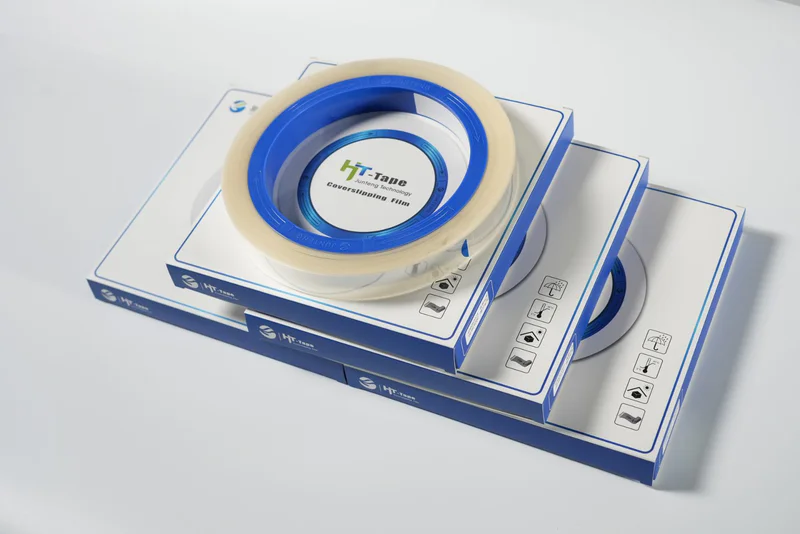
China Coverslipping Film Factory
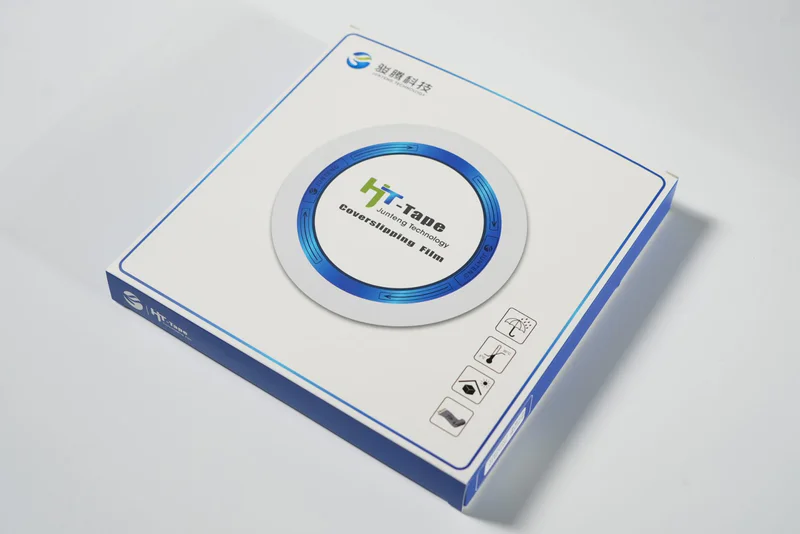
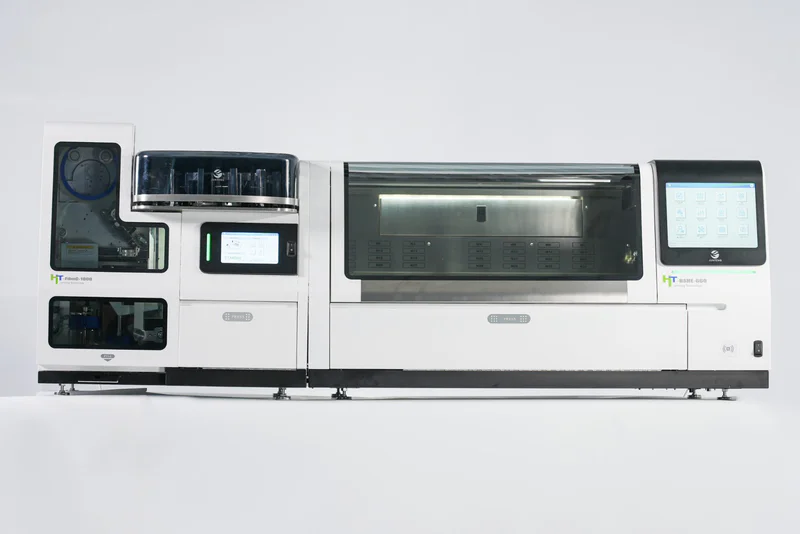
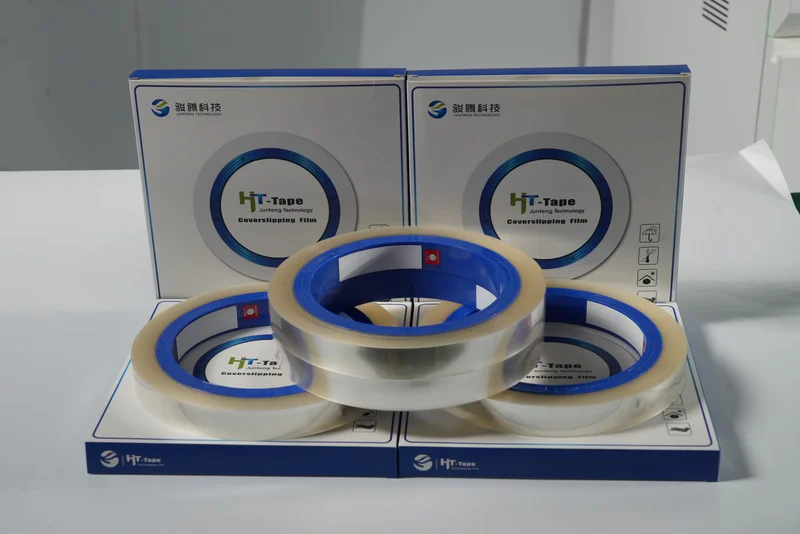
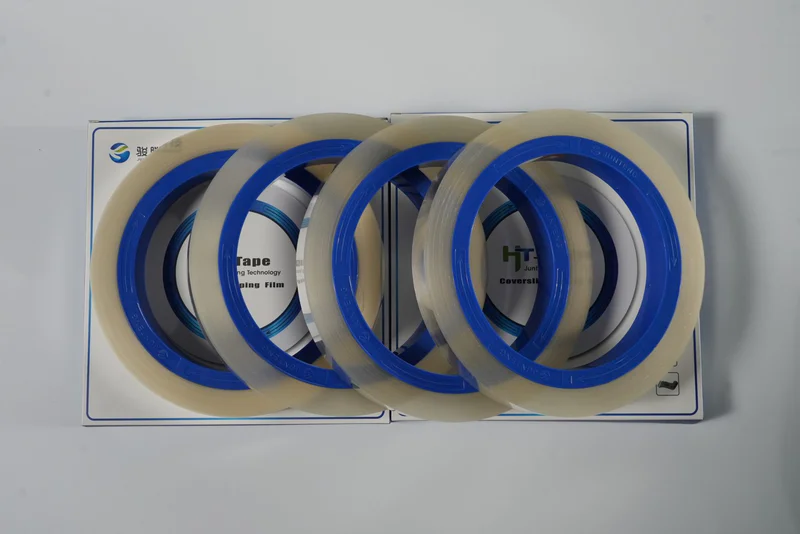
Xylene-activated automatic coverslipping film for histology slides. It runs on all film coverslippers and is fully matched with the HT-FilmC-1000 automatic coverslipper.
Each 70 m roll covers roughly 1,500 slides. Coverslipping is fast, the viewing area stays clear under the microscope, and you stop dealing with mounting medium overflow on the bench and broken coverglass in the tray.
Send your coverslipper model and monthly slide volume, we reply with compatibility and a quote within 24 hours.
70m
Film length per roll, batch-controlled production
1,500
Slides covered per roll, approximate
46-60
Cut length in mm, selected on the machine
24h
Quote and compatibility answer within 24 hours
Everything You Need To Spec Your Film
Jump straight to the answer you need, from checking whether our film runs on your coverslipper to how it holds up under scanning and long-term archive, what it costs per slide, and how to get trial rolls before you order in bulk.
Equipment Compatibility
Does it run on your machine
Why Film Quality Matters
What bad film costs you
Film Options & Specs
Width, length, thickness
Finished Slide Quality
No bubbles, clean edges
Scanning & Archive
Digital reading and storage
Cost Per Slide
Consumption and real cost
QC & Documents
Batch control and paperwork
Storage & Fixes
Handling and common faults
Factory Supply Support
Stock, OEM and lead time
FAQs
MOQ, samples, shipping
One Film For All Film Coverslippers
Our xylene-activated coverslipping film comes in one fixed roll format built for automatic film coverslipping systems. Nothing to configure, no machine-specific size to order, no waiting on a custom run.
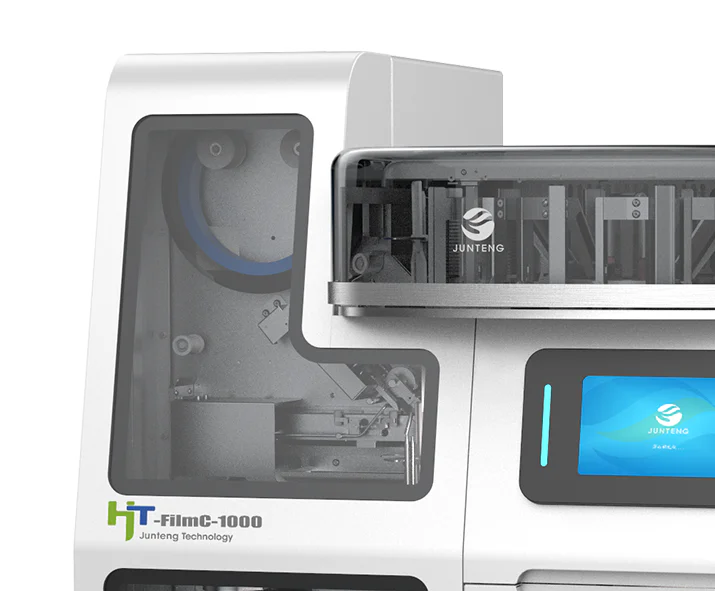
It runs on the film coverslippers already in histology laboratories, including Sakura Tissue-Tek Film® systems, and is fully matched with our own HT-FilmC-1000 automatic coverslipper.
One format, no configuration
70 m rolls, 46 mm and 48 mm cut length selected on your machine. The same roll that fits your coverslipper today fits it on every reorder.
What It Runs On
Film Coverslippers
Loads and runs in any automatic film coverslipper built for xylene-activated film.
The fixed roll format handles routine feeding, cutting and coverslipping, with no liquid mounting medium to dispense, top up or clean off the bench.
Sakura Compatible
Made for use with Sakura Tissue-Tek Film® coverslipping systems, so you have a second source for a consumable you cannot afford to run out of.
Take trial rolls first and check feeding, cutting and finished-slide quality on your own machine before you move any routine purchasing across.
HT-FilmC-1000 Matched
Fully matched with our own HT-FilmC-1000 automatic coverslipper, machine and consumable validated together rather than assumed to fit.
Coverslipper, film and technical support all come from one supplier, so a problem never turns into two companies pointing at each other.
View HT-FilmC-1000Compatibility answer and quote within 24 hours.
What We Check For You
Six things decide whether a film runs cleanly on your machine or costs you slides every week. We go through all of them against your model before we quote.
What We Check
Confirm By Model, Validate By Sample
We confirm compatibility by equipment model and sample validation. If your coverslipper model has not been verified with our film before, we will tell you and recommend trial rolls first. Nobody benefits from a bulk order that jams on your line.
Why Choose Film Coverslipping
Xylene-activated film finishes the slide without dispensing liquid mounting medium and without glass coverslips. That takes two of the messiest steps out of routine histology and gives you a faster, cleaner run every day.
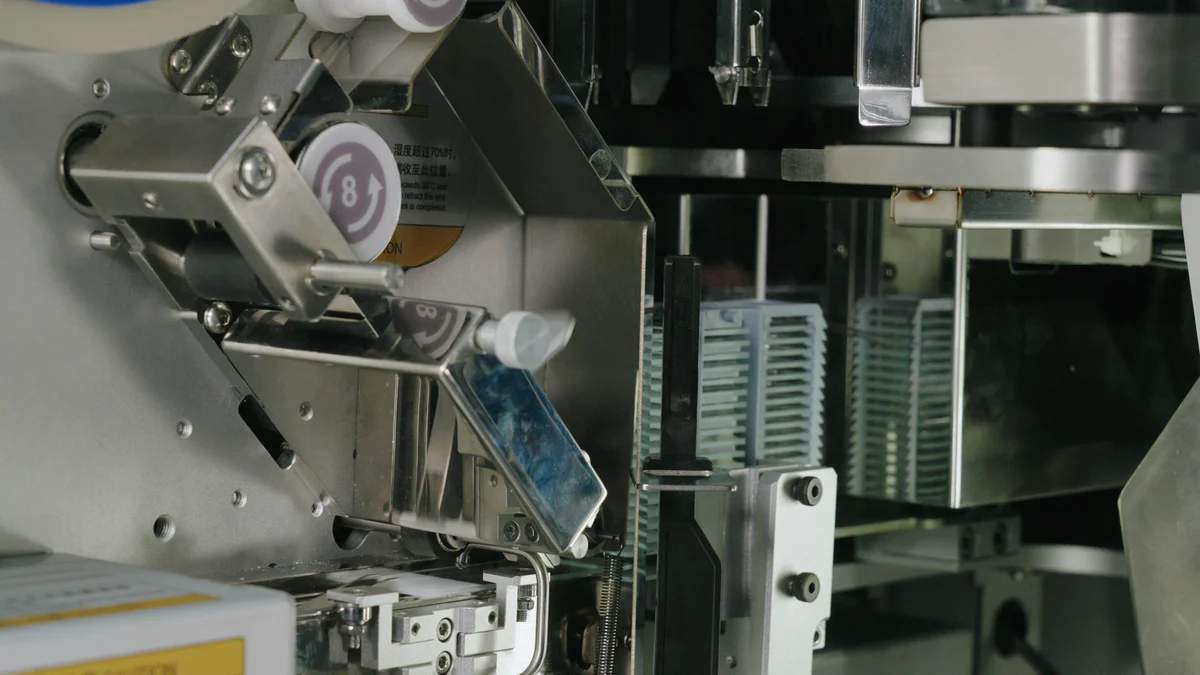
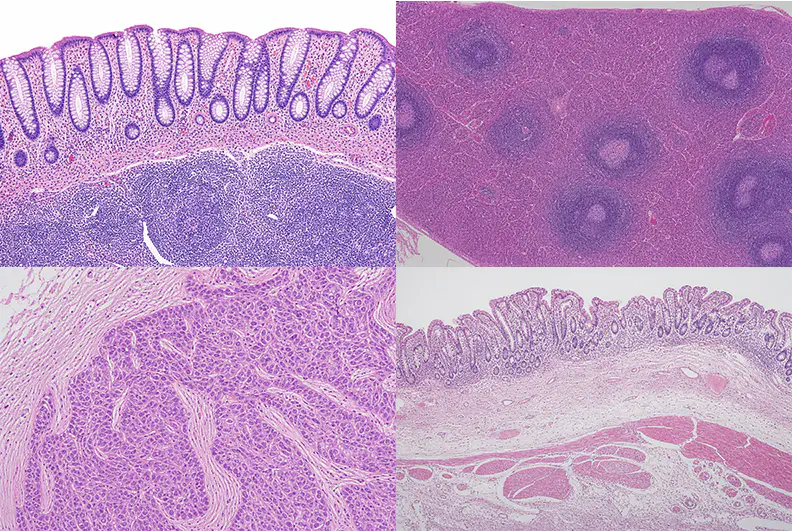
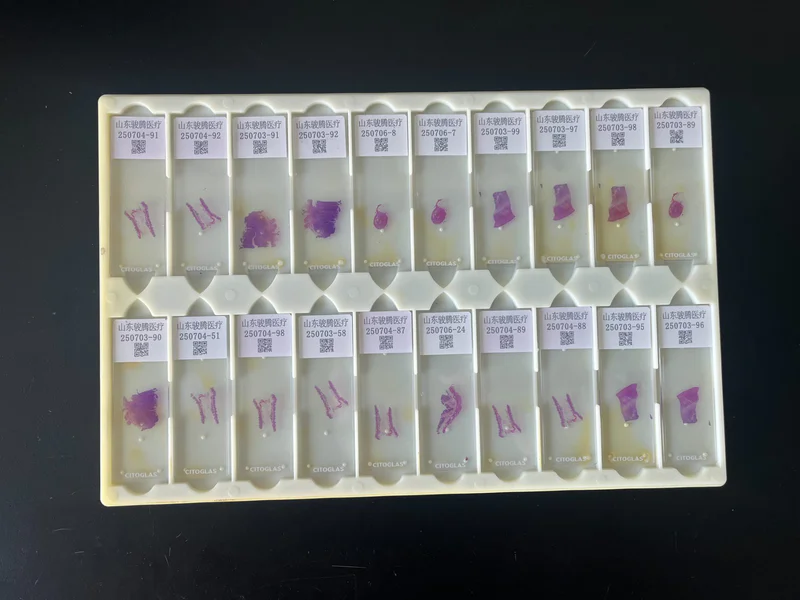
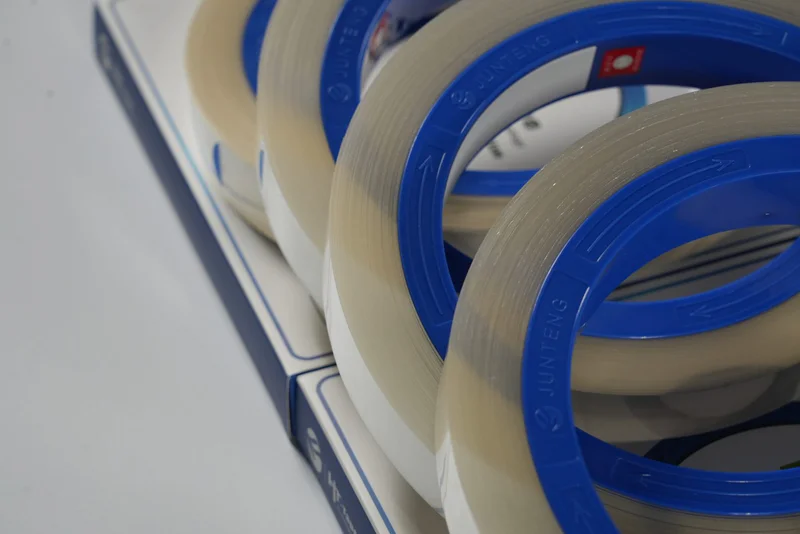
Put them together and routine slide finishing gets simpler: fast automatic coverslipping, a clear viewing area, no mounting medium to clean up and no broken coverglass to deal with. Fewer things to go wrong between the stainer and the pathologist.
Need Staining Connected Too?
If the project asks for a continuous workflow rather than coverslipping alone, the HT-FilmC-1000 connects directly to the HT-BSHE-660 slide stainer. Explore our automated staining and coverslipping solution to see how stained racks transfer into film coverslipping without a manual handoff.
Automatic Coverslipping Film Specifications for Histology
Full specification for comparison against what your lab or customer currently runs. Film width, roll length, and cut length are listed separately so you can check compatibility item by item instead of guessing from a single film size figure.
24 mm
Film Width
Fixed dimension, matched to standard histology slides.
70 m
Roll Length
Approximately 1,500 slides per roll for stock planning.
45–60 mm
Cut Length
Adjustable range, with 46 mm and 48 mm most commonly used.
| Specification | Product Information |
|---|---|
| Product type | Automatic coverslipping film |
| Application | Histology slide coverslipping |
| Film width | 24 mm |
| Roll length | 70 m |
| Coverslip cut length | 45–60 mm, adjustable on the machine |
| Common cut lengths | 46 mm / 48 mm |
| Typical yield | Approx. 1,500 slides per roll |
| Activation method | Xylene-activated |
| Liquid mounting medium | Not required |
| Glass coverslip | Not required |
| Compatible equipment | Automatic film coverslippers, confirm by exact model |
| Matched coverslipper | HT-FilmC-1000 |
| Packaging | Paper box |
| Recommended storage | Below 40°C |
Film width is fixed at 24 mm and cannot currently be customized. Cut length is adjustable on the machine within the 45–60 mm range, so confirm the setting your customer uses before the first order.
Three Numbers Decide Your Cost
Film width, roll length and coverslip length control whether the roll loads on your machine and how many usable slides you get out of it. Send us your machine model and current film information, and we confirm the right configuration before you order.
Finished Slide Quality
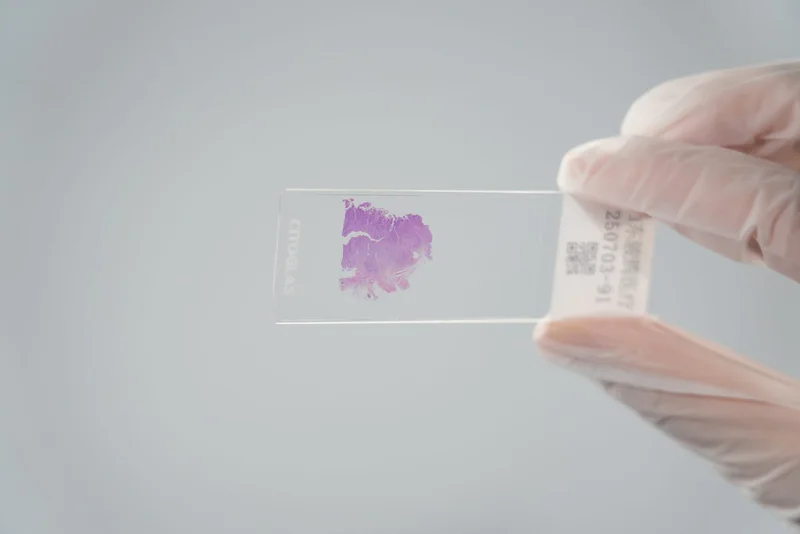
Nobody buys film. You buy the slide that comes out the other end: clear, flat, cleanly covered, with no liquid mounting medium and no glass coverslip anywhere in the process.
Look at the surface, the covered area, the film edges and the microscopic view. Then take trial rolls and check the same things on your own bench.
Clear Viewing
The transparent polymer film sits over the section and stays out of the way. At reading magnification the pathologist sees tissue, not film.
Judge it on your own microscope with your normal settings before anything goes into routine use.
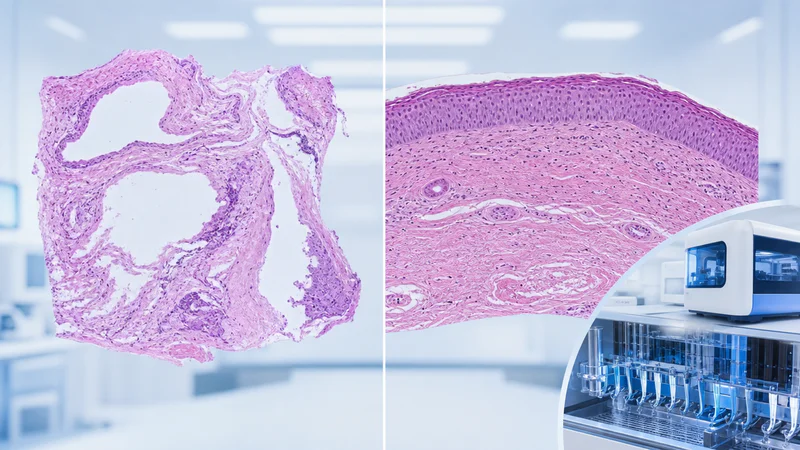
Flat Coverage
The film should lie down evenly across the slide with the tissue area fully covered, no ripples and no raised patches.
Correct feeding, proper xylene activation and a clean cut are what keep wrinkles, bubbles and lifted edges off the finished slide.
Clean Edges
There is no liquid mounting medium being dispensed, so there is nothing to run past the covered area or creep onto the frosted end.
Slide edges stay clean, and so does the inside of the machine. Nobody spends Friday afternoon scraping hardened medium off a component.
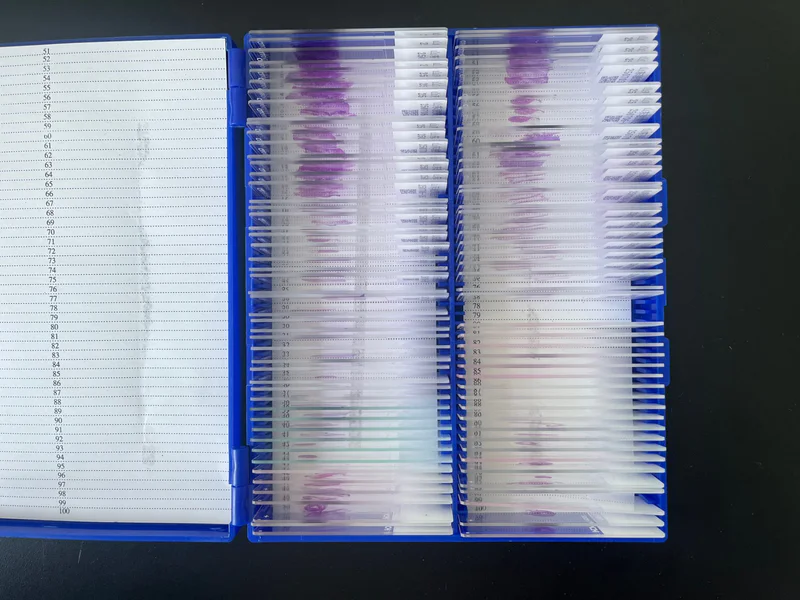
No Broken Glass
Film coverslipping uses no glass coverslips at all, so a whole category of problems disappears from your workflow.
No chipped corners during loading, no cracked slides in the tray, no fragments for your staff to handle at disposal.
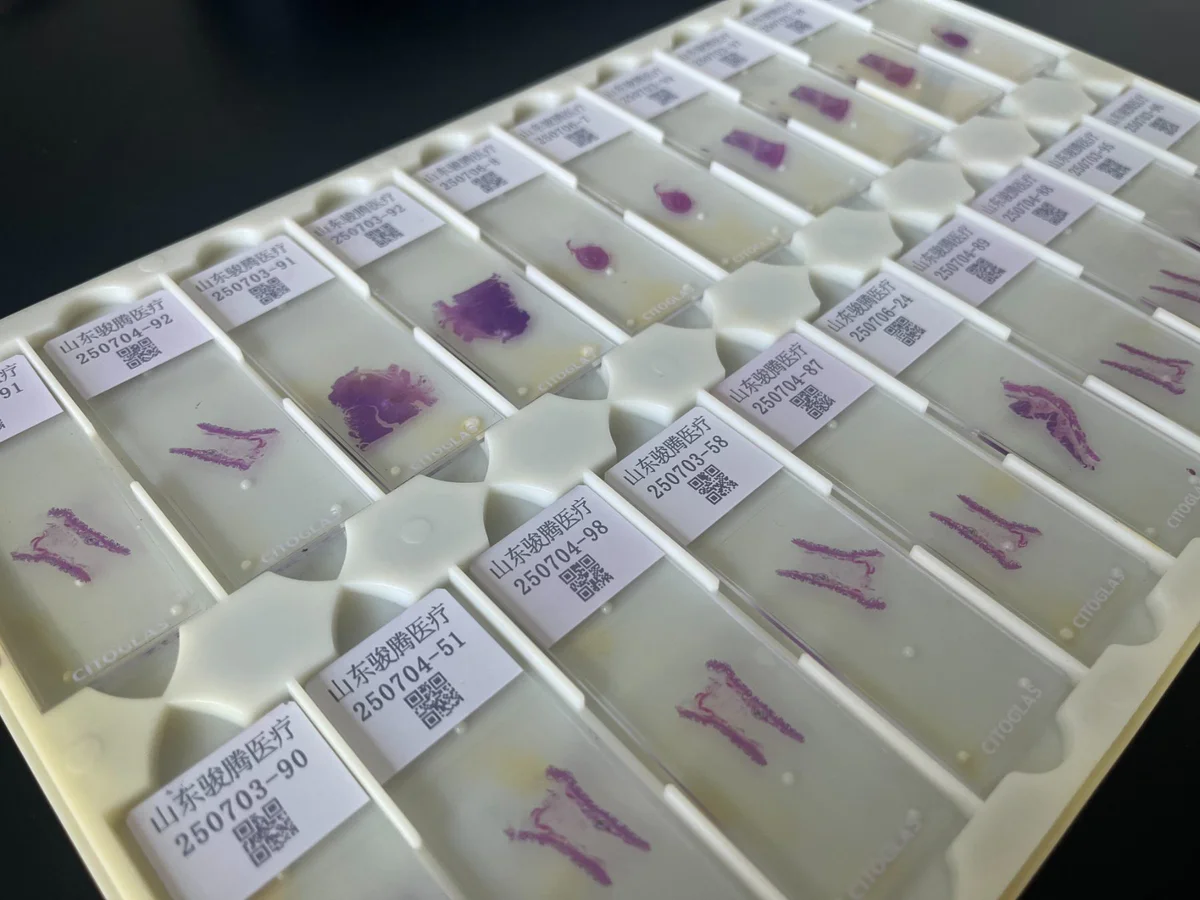
Your Own Slides
Our lab conditions are not yours. Staining protocol, solvent, machine settings and how dry the slides are when they reach the coverslipper all change the result.
Trial rolls let you review film feeding, cutting, slide flatness and microscopic clarity under your routine conditions, before any bulk order.
Trial arrangement and quote within 24 hours.
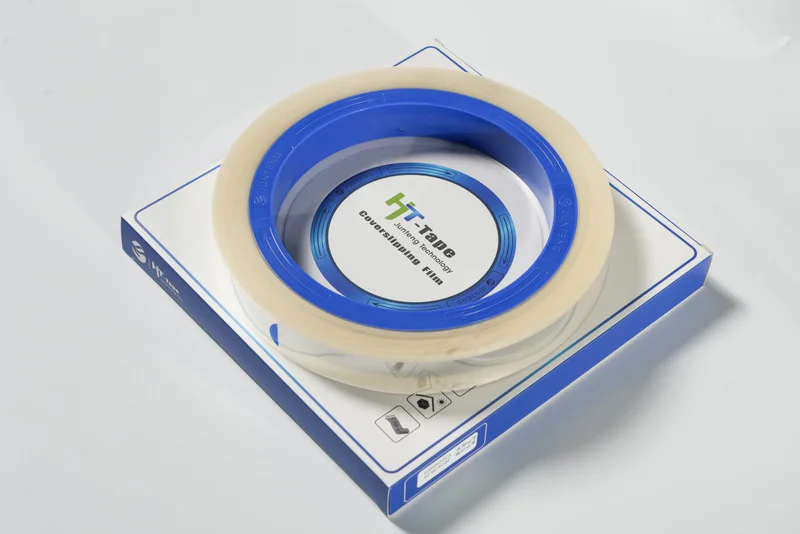
Microscopy And Scanning Results
The transparent film gives a clear viewing area over the section and a flat finished surface, which is what routine microscopy and digital scanning both need.
Run representative slides through your own microscope and your own scanner, and judge them against your normal image-quality criteria before the film goes into regular use.

Clear Observation
The stained tissue stays fully visible, with no liquid mounting medium and no glass coverslip sitting between the section and the objective.
Review finished slides at your routine magnification and illumination settings, exactly as your pathologist would.
Flat For Scanning
Consistent film coverage keeps the scanning area flat. An uneven slide makes autofocus hunt, and your scan times climb.
Before routine digital scanning, check autofocus performance, image sharpness, film edges, bubbles and any visible surface artifacts on your scanner model.
Your Own Workflow
Trial rolls let you review slide appearance, microscopic clarity and scanning performance under your own laboratory conditions rather than ours.
Send your scanner model with the sample request if digital pathology evaluation is part of the decision.
Technical note. Long-term archive performance should be evaluated against your own storage conditions and retention requirements. A slide you have to keep for ten years needs a harder test than one you keep for two.
Confirm It On Your Own Scanner
Scanner compatibility is confirmed with your slide types, your staining methods, your scanner model and your acceptance criteria. Not ours. Send us those four and we will plan the evaluation around how your lab actually runs, including how long you need the slides to hold up in archive.
Work Out Rolls And Stock Levels
One 70 m roll does not give a fixed number of slides. Output follows the cut length set on the machine, so a lab running 60 mm gets around 25 percent fewer slides per roll than one running 46 mm. Enter the real numbers below and see what your customer actually consumes.
Your volume
For reference, one HT-FilmC-1000 running continuously for 8 hours has a theoretical ceiling of around 8,000 slides. Most routine laboratories sit well below that, so use the actual daily count rather than the machine rating.
Use the figure the laboratory actually reports, not a capacity estimate. If you only know the daily count, switch back to per day.
46 mm
Common settings
Figures are theoretical, based on 70,000 mm of film divided by the cut length. Real yield runs slightly lower once threading, trimming, and the roll end are accounted for.
1,522
Slides per roll
At a 46 mm cut length, from one 70 m roll.
5
Rolls per month
6,600 slides per month
0
Safety stock, rolls
0
Suggested order, rolls
Calculated using the standard safety-stock period.
The headline figure of approximately 1,500 slides per roll comes from the common 46 mm and 48 mm settings. It is not a fixed yield across the whole 45–60 mm range.
Reference Yield By Cut Length
| Cut length | Theoretical slides per roll |
|---|---|
| 45 mm | Approx. 1,556 |
| 46 mm Common | Approx. 1,522 |
| 48 mm Common | Approx. 1,458 |
| 60 mm | Approx. 1,167 |
Send the cut length your customer runs and the real volume. We come back with roll pricing, cost per slide, and a stock plan that covers your shipping lead time.
Quality Control And Batch Documents
What gets checked before a batch ships, and which documents come with it. Your customer will ask for both, so here they are separated rather than bundled into one vague claim.
Fixed Specification Check
Cutting Verification
Verification covers the supported range rather than every individual millimetre setting. If your customer runs a specific length outside 46 mm or 48 mm, tell us and we test at that setting before supply.
Quality Management Certificates
- ISO 13485 Medical device quality management system
- ISO 9001 General quality management system
These certify the management system, not the product itself. Check the company name, validity period, and certified scope on the certificate before using it in a submission.
Product And Export Documents
- CE documentation By scope
- Product specification sheet Available
- Instructions for use Available
- Inspection report Per batch
- Batch information Per batch
- Packing list Per shipment
CE documentation is confirmed against the specific product and its declared scope. Tell us the destination market and we confirm in writing what covers this film.
ISO 13485 and ISO 9001 are quality management system certificates. CE documentation covers product conformity. They are not interchangeable, so do not present them as one set of product certificates in a tender. Use only currently valid documents, and confirm the certified scope covers this film before making any compliance claim.
Send your destination market and we confirm which certificates and documents apply to this film, with scope and validity stated rather than implied.
See The Checks Before Shipment
The same checks described above, photographed on the line. Ask for the set matching your batch and hand it to your customer instead of describing it.
 01
01
Width Measurement
24 mm verified on the roll, not assumed from the order.
 02
02
Roll Length Check
70 m confirmed per roll before packing.
 03
03
Surface Inspection
Scratches, creases, and contamination caught before the roll ships.
04
Cutting Test
Run on machine within the supported 45 to 60 mm range.
 05
05
Cut Edge Review
Clean edges, no tearing or stringing along the cut line.
 06
06
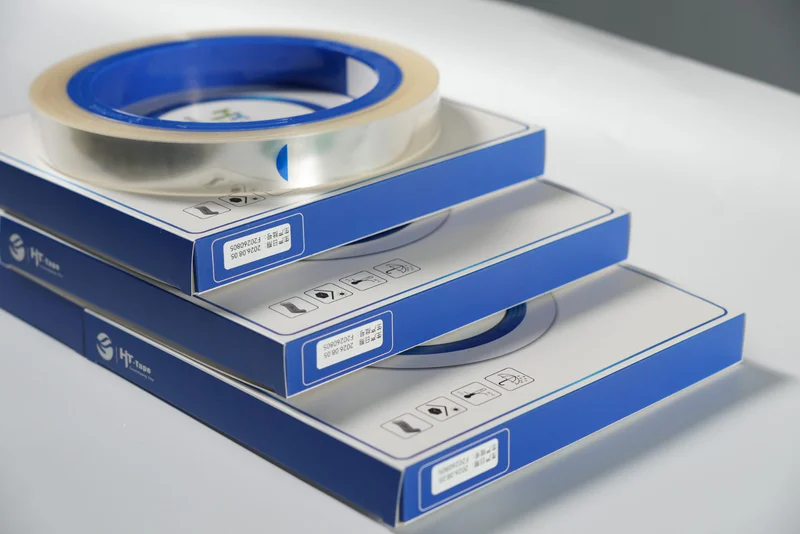
Packing And Labelling
Batch marking checked against the paperwork in the box.
Photos show the inspection process. Records for your specific batch are provided with the shipment.
Store It Right And Fix Issues Fast
Most film complaints are not film faults. A carton stored under something heavy, a roll loaded the wrong way round, or film left exposed overnight all show up as feeding and adhesion problems the next morning. Four stages, and most of them never happen.


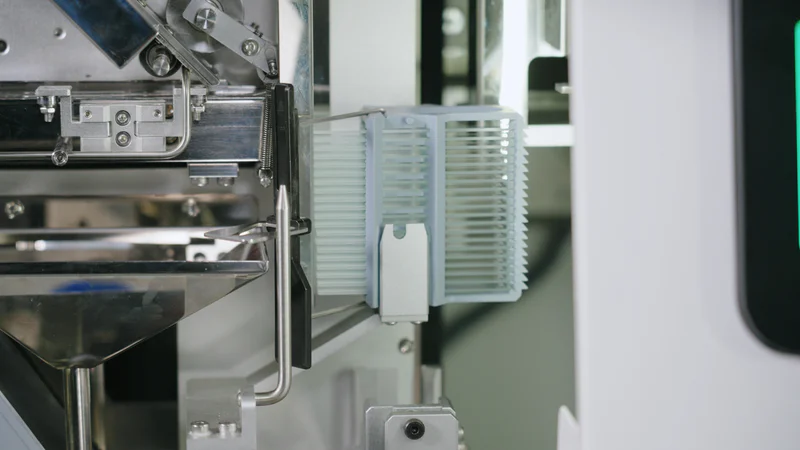

The film arrives in the condition it should stay in. This stage is about not undoing that before the roll reaches your machine.
- Leave the film in its original packaging until you need it
- Keep rolls away from dust, moisture and direct light
- Store cartons upright, or as the product label specifies
- Nothing heavy on top, nothing that bends or crushes the roll
- Check batch number and shelf life before you open it
Two minutes of checking here saves a jammed run and a tray of slides that have to go through again.
- Look at the roll for damaged edges, loose winding or deformation
- Confirm the film specification matches your coverslipper model
- Let the film settle to the operating environment where required
- Follow the machine instructions for roll direction, loading and tension
Day to day, the film path quietly decides your reject rate. Keep it clean and keep hands off the active surface.
- Keep the film path and cutting area clean
- Do not touch the active film surface
- Set aside any roll with damaged edges or abnormal winding
- Record the batch number every time you change to a new roll
- Follow the specified handling procedure on stops and roll changes
At the end of the day, withdraw the exposed film and rewind it back onto the roll. That exposed length sitting in the machine overnight is what gives you trouble on the first run tomorrow morning, and this one habit removes it.
Running a different coverslipper? Send us the model and we will tell you what end-of-day handling should look like on your machine.
Storage temperature, humidity, light protection and opened-roll usage time are set in the product instructions supplied with your confirmed specification. Follow that document rather than this page, and ask us for it before your first order if you need it for your SOP.
Store It Right, Fix It Fast
Most film complaints trace back to how the roll was stored or how the machine was set, not to the film itself. Here is the storage condition to hold, and the checks to run before anyone opens a quality claim.
< 40°C
Store below 40°C. No refrigeration and no freezing required.
How To Hold Stock
Store the film in its original paper box at a recommended temperature below 40°C. Follow the product instructions for handling opened rolls.
For anything not covered here, including opened rolls, follow the instructions supplied with the product rather than a general storage assumption.
Before You Open A Claim
Six checks that resolve most reported issues on site. Run them first, and if the problem stays, send us photos of the finished slides with the machine settings.
01
Bubbles under the film
Usually the slide is too dry or the xylene level is off. Check that slides come out of the last clearing step still wet, and confirm the xylene volume and freshness on the machine before blaming the film.
02
Film lifting at the edges
Check the cut length against the slide and the tissue position. If the film is cut short of the section, edges have nothing to seal against. Also confirm pressure roller condition.
03
Uneven or torn cut edges
Inspect the cutting blade for wear or residue buildup. Confirm the cut length is set inside the supported 45 to 60 mm range and that the film path is threaded correctly.
04
Film feeding stops or jams
Check the roll is seated correctly and the film path is clear. A crushed roll core from storage or transport is a common cause, so inspect the roll before loading rather than after a jam.
05
Haze or reduced clarity on review
Check whether slides were fully dehydrated and cleared before coverslipping. Residual water carried into the film step shows up as haze that no film can correct afterwards.
06
Results changed after a new batch
Record the batch number and how the roll was stored, then send us both with photos of the finished slides and the machine settings. That is enough for us to trace it, and it is far faster than an open-ended complaint.
Machine settings vary between coverslipper models. If your customer runs a different machine, confirm the settings against that manufacturer's instructions before adjusting anything based on the checks above.
Send the batch number, machine settings, and photos of the finished slides. We come back with a direct answer, not a request for more information.
Film And Coverslipper From One Source
HT-FilmC-1000 automatic coverslippers, 70 m film rolls, trial samples, batch replenishment and export packing all come out of the same place. You source the machine, the compatible film, the routine replacement stock and the technical support from one supplier, which keeps procurement simple and your daily slide processing supplied.




Four Reasons It Stays Simple
Buying the machine from one company and the film from another works right up until something goes wrong. Then it becomes your job to work out whose problem it is.
Questions Before You Order
Dimensions, compatibility, consumption, and documents. The points buyers check before they commit to a first order or write the film into a recurring supply plan.
01
How does automatic coverslipping film work?
The film is xylene-activated and applied by an automatic film coverslipper. Neither liquid mounting medium nor a separate glass coverslip is required, which removes glue dispensing and coverglass handling from the post-staining bench.
02
Which coverslippers is this film compatible with?
It is matched to the HT-FilmC-1000 and can be evaluated for other automatic film coverslippers, including selected Sakura models. Compatibility has to be confirmed by exact machine model and sample testing. Do not assume it fits every model in a series.
03
What are the film dimensions and packaging?
Each roll is 70 m long and 24 mm wide. The film is supplied in a fixed standard format and packed in a paper box. The 24 mm film width cannot currently be customized.
04
How many slides does one roll cover?
Approximately 1,500 slides per roll, based on the commonly used 46 mm and 48 mm settings. That is not a fixed yield across the whole 45–60 mm range: 45 mm gives around 1,556 slides and 60 mm around 1,167. Set your cut length in the calculator on this page to see the figure for your own operation.
05
What is the available cutting-length range?
The supported cutting-length range is 45–60 mm. The cutting length is set on the automatic coverslipper according to the laboratory's routine preference.
46 mm and 48 mm are commonly used settings. A shorter cut length provides more coverslipping cycles per roll, while a longer setting covers a larger slide area.
06
Is mounting medium or glass still needed?
No. Liquid mounting medium and glass coverslips are not required. Xylene is still part of the process because the film is xylene-activated, so keep the existing solvent handling and ventilation arrangements in place.
07
How should the film be stored?
Store the film in its original paper box at a recommended temperature below 40°C. No refrigeration or freezing is required. Follow the product instructions for handling opened rolls.
08
Are finished slides suitable for scanning?
The polyester-based film gives high light transmission and anti-reflection performance. If the lab scans routinely, run the film through its own scanner with its own tissue types before committing, and judge flatness, edge coverage, and clarity on those results rather than on a specification line.
09
Can we test samples before a routine order?
Yes, and for a replacement application it should be the first step. Send the exact coverslipper model, the cut length in use, and the monthly volume. We arrange samples so the lab can check feeding, cutting, and finished slides on its own machine before any recurring supply is agreed.
10
What documents are supplied with the film?
Quality management certificates may include ISO 13485 and ISO 9001. Available product and conformity documents may include CE documentation, product specifications, instructions for use, inspection reports, batch information and packing documents.
These are two different things. ISO certificates cover the quality management system, not the individual roll, so the film should never be described as ISO 9001 certified. Confirm the certified scope and validity, and tell us your destination market so we can state in writing which documents apply.
Send Your Film Details To Derek
Whether you need a compatibility check against your coverslipper, trial rolls before committing, or a bulk price on routine replenishment, send what you have. Derek replies personally within 24 hours with a real answer and a clear next step.

Hi, I'm Derek.
Your Coverslipping Film Contact
Every message here reaches me directly. Tell me what you run and I come back with a compatibility answer and a real quote, not a brochure.
Your coverslipper model, current film code or a photo of the roll label is enough to start. We supply coverslipping film to laboratories and distributors across 60+ countries.
Derek
Sales, Shandong Junteng Medical Technology Co., Ltd.
Tell Us About Your Coverslipper
Fields marked are required.