
The first thing I look at in a coverslipping room is not the machine. It is the bin underneath it. Setup strips. Jammed segments. The leader and trailer every roll surrenders at each change. On glass lines, add the coverslips snapped in the gripper and the wipes soaked in mounting media. That bin is the lab's true price per slide, lying there in plain view — and in all my years I have never walked into a lab that had counted what was in it.
Machines get compared on quotes. Slides get bought by the box. The number that actually runs the department — the cost of one finished slide — appears on neither document. It lives in the tape, in the yield, in the bin.
One honest admission before we start, because this trade has enough spin already: film costs more per slide than glass. On the consumables line, glass wins every time. What that premium buys, when it pays for itself anyway, and who ends up holding the consumable revenue for the next ten years — that is the whole story. A coverslipper is not priced in dollars. It is priced per slide.
Here is the arithmetic that reframes every quote. The machine is a fixed cost, divided by every slide it will ever produce. The tape is a variable cost, multiplied by every slide it produces. Over a five-year life, that variable line decides which quote is actually cheap. I have never watched a lab compute this before signing. I have seen the results many times.
I have installed and repaired coverslippers from the big names for more than a decade, film machines and glass machines, and the problems below are the ones I keep finding on site — I wrote the short version of this argument in the real cost of a coverslipper here. Each one runs the same way: symptom, how to judge it, root cause, first move.
Problem 1: The Roll That Looked Identical
Symptom. The lab saved money on "compatible" tape. Three months later the covers peel at the edges on some slides, and the machine jams once a week. The savings show up in the monthly spend report. The cost shows up in re-covers nobody logs.
How I judge it. I take the new roll and the reference roll apart side by side. I measure width with calipers. I check the adhesive side — whether it activates under xylene the way it should, whether it sticks or leaves haze on the slide. Tape that looks identical on the shelf is not identical in the machine.
Root cause. A roll of coverslipping film is three specs in one: substrate, adhesive chemistry, width tolerance. Cut one corner and the failures are the slow kind — edges lifting, the odd jam, a little haze. I have seen rolls fail on width alone — a fraction of a millimeter off, the feed drags, the machine registers a jam. The lab calls it a machine fault. It is a tape fault.
What I try first. Never switch rolls wholesale. Run a short test batch, inspect the edges under a scope, then switch. Keep one reference roll in the drawer, so the next "compatible" offer gets measured against something real. The test batch costs one afternoon; a wholesale switch costs a month of bad slides and a service call.
Problem 2: The Machine Was the Cheap Part
Symptom. The coverslipper quote beat every competitor. The tape contract was the fine print, and the fine print escalates.
How I judge it. I read the consumables clause. Exclusive supply. Minimum annual purchase. Price escalation tied to nothing in particular. If the machine only runs on the vendor's tape, that clause is the real invoice — the machine price is just the deposit.
Root cause. Razor-and-blades pricing. The machine is sold close to cost, the margin lives in the consumables, and the consumables are locked to one supplier. The lab does not own the machine; it rents the tape. None of it appears on the quote. It lives in the supply agreement, signed by people who will not be buying tape for the next five years.
What I try first. Before anyone signs, get the per-roll price and the projected annual volume in writing, for five years. Fold that number into the machine price and compare the quotes again. In my experience the ranking changes more often than not. If a vendor refuses to put the tape price on paper, that is the answer.
Problem 3: The Roll That Vanished
Symptom. The techs change tape every week. The rated roll life never shows up anywhere.
How I judge it. I count slides per roll for a month instead of asking, then count the waste — setup strips, jammed segments, the leader and trailer discarded at every change. I also check whether the machine purges before every batch; that purge is pure cost, charged to every roll. A month of yield data on the prep-room wall settles most arguments before they start.
Root cause. Some machines burn tape in calibration and start-up cycles. It does not look like a failure, so nobody flags it. It is just a tax, paid in every single roll, for the life of the instrument. The machine is within spec; the spec is just expensive. Nobody audits it, because nobody owns the number — the same disease as Problem 4, in an earlier stage.
What I try first. Track yield, not "the roll is empty." If a roll consistently yields well below what the math says, the machine design is eating the margin — and that cost repeats for years. That is also why I test a roll's yield on the bench before recommending a machine, not after the contract is signed.
Problem 4: Nobody in the Room Knew the Number
Symptom. The lab manager can quote the machine price, the reagent budget, even the service contract. Ask what one finished slide costs and the room goes quiet. It is the same in every lab I walk into: the number is never on the wall, never in the review, never in the tender.
How I judge it. I ask the question, then I wait. That pause tells me costs are tracked by department, not by unit of work. Which means the real number is not managed by anyone.
Root cause. Pathology budgets run by line item — glass here, media there, labor somewhere else. Per-slide cost crosses every line, so nobody owns it. The pathologist owns the diagnosis, the manager owns the budget, the techs own the runs. The per-slide number has no owner, so it drifts whichever way the other decisions push it.
What I try first. The five-line formula below. It takes ten minutes and a calculator, and it ends the debate about which machine is cheap. The argument never survives contact with the arithmetic: first a silence, then someone says "that can't be right," and then the lab starts keeping the number.
Problem 5: The Throughput Trap
Symptom. The coverslipper runs twenty minutes and waits four hours. A tech hovers nearby because the next batch needs loading. Labor per slide quietly dwarfs every other line.
How I judge it. I count operator minutes per slide, not machine minutes per slide. That is the number the brochure never prints, and it is usually the biggest number in the room. If the tech cannot leave the room for ten minutes during a run, the machine is costing labor, whatever its speed.
Root cause. Sizing done on machine speed alone. A fast machine that needs constant babysitting is a slow machine with a nicer label. Throughput is only real when the tech is free to do something else. I have watched a lab buy a fast machine for a small daily load because the brochure said fast. The machine was fast; the tech still stood there all morning, waiting for the next tray.
What I try first. Batch the work so the machine runs full and the tech walks away between loads. Then count the labor line honestly. For most labs, labor is the largest single cost in the per-slide equation — bigger than tape, bigger than glass, bigger than the machine itself.
Problem 6: "Film Is Expensive" — Price It Anyway
Symptom. The lab went glass "because film seemed expensive." Six months in, the techs are picking glass fragments out of the gripper, wiping media off the stage, and re-coverslipping slides where media crept under the glass.
How I judge it. I run both methods through the lab's own volumes, honestly. Glass wins the consumables line, straight up — coverslips are cheap and everywhere. Then I add the lines glass quietly collects: mounting media, cleanup time, breakage, re-covers, and the slower pace charged to labor. On the film side of the ledger: a film coverslipper runs faster, produces no glass fragments, uses no liquid media — nothing to overflow, nothing to clean — and the strip sits flat and clear on the section. The premium is real. So is what it buys.
Root cause. Comparing one line instead of five. Glass coverslipping — the traditional approach, the one Leica's coverslipper line made standard — is the budget route, and its consumables are genuinely cheap. But cheap consumables are not the same as a cheap slide. And a second root cause nobody says out loud: glass slides and media are commodity items, any supplier on earth sells them, and the dealer who sold the machine never sees a cent of consumable revenue. Film is different — only a handful of manufacturers in the world make coverslipping tape. Whoever supplies the roll keeps the account.
What I try first. Run the five lines with both methods and let the lab decide with open eyes. Glass is a fair choice when budget rules and throughput is modest. Film earns its premium on speed, cleanliness, and clarity — and for a distributor, film is the only one of the two that keeps paying after the machine is bolted down.
The Five-Line Formula I Hand Out
Cost per finished slide, five lines:
- Tape line — roll price ÷ slides per roll. Any supplier can state both numbers. Ask for them. If they quote yield by weight instead of by slide, make them convert.
- Glass line, if glass — coverslip price + mounting media per slide + cleanup and waste handling. Most labs already have this sitting in their purchase orders.
- Machine line — machine price ÷ slides over its working life. Usually the smallest line of the five. A ten-year life is a fair assumption for this class of equipment; be conservative and use five.
- Labor line — operator minutes per slide × the loaded cost of that time. Stand at the coverslipper for an hour and count; nobody trusts the estimate on the first try.
- Waste line — re-covers, QC rejects, jammed rolls. Every re-cover is a slide that cost twice. Labs rarely count these until asked.
Add the five and you have the only number that matters. Five questions to ask before signing anything:
- Is the tape open to any supplier, or locked to the machine vendor?
- What is the roll price, in writing, for five years?
- What is the real slides-per-roll yield — measured, not rated?
- How many operator minutes per slide does the workflow actually need?
- What does a re-cover cost, in material and in time?
Three of these numbers come from the vendor and belong in writing: roll price, roll yield, any locked-supply clause. Two come from the lab: operator minutes per slide, and how often slides get re-covered.
Quality guidance from bodies like the Royal College of Pathologists here keeps returning to the same point: a slide must be readable, stable, and reproducible over time. Per-slide cost is how you fund that, slide after slide, without surprises.
What We Test, Because of the List Above
The six problems above are the failure roots we engineer against in factory testing.
We make the tape ourselves — the coverslipping film here — so the spec is ours to hold: polyester substrate, adhesive that activates properly under xylene, width held tight roll after roll. Those are the two corners Problem 1 says get cut. Every roll is checked on the bench before it ships.
We are one of the few factories that make the film, and the tape is a direct replacement for Sakura's tape on Sakura's own coverslippers: same width, same xylene activation, lower price. Our coverslippers list below the Sakura equivalents too — the cleanest answer to Problem 2 I know: the honest machine is not the expensive one. For a lab already running a Sakura coverslipper, this answers Problems 2 and 3 at once: the machine stays open to competition and the tape line drops. And it is the recurring line glass can never give a distributor — sell the film into the installed base first, and the slide coverslipper conversation follows on its own.
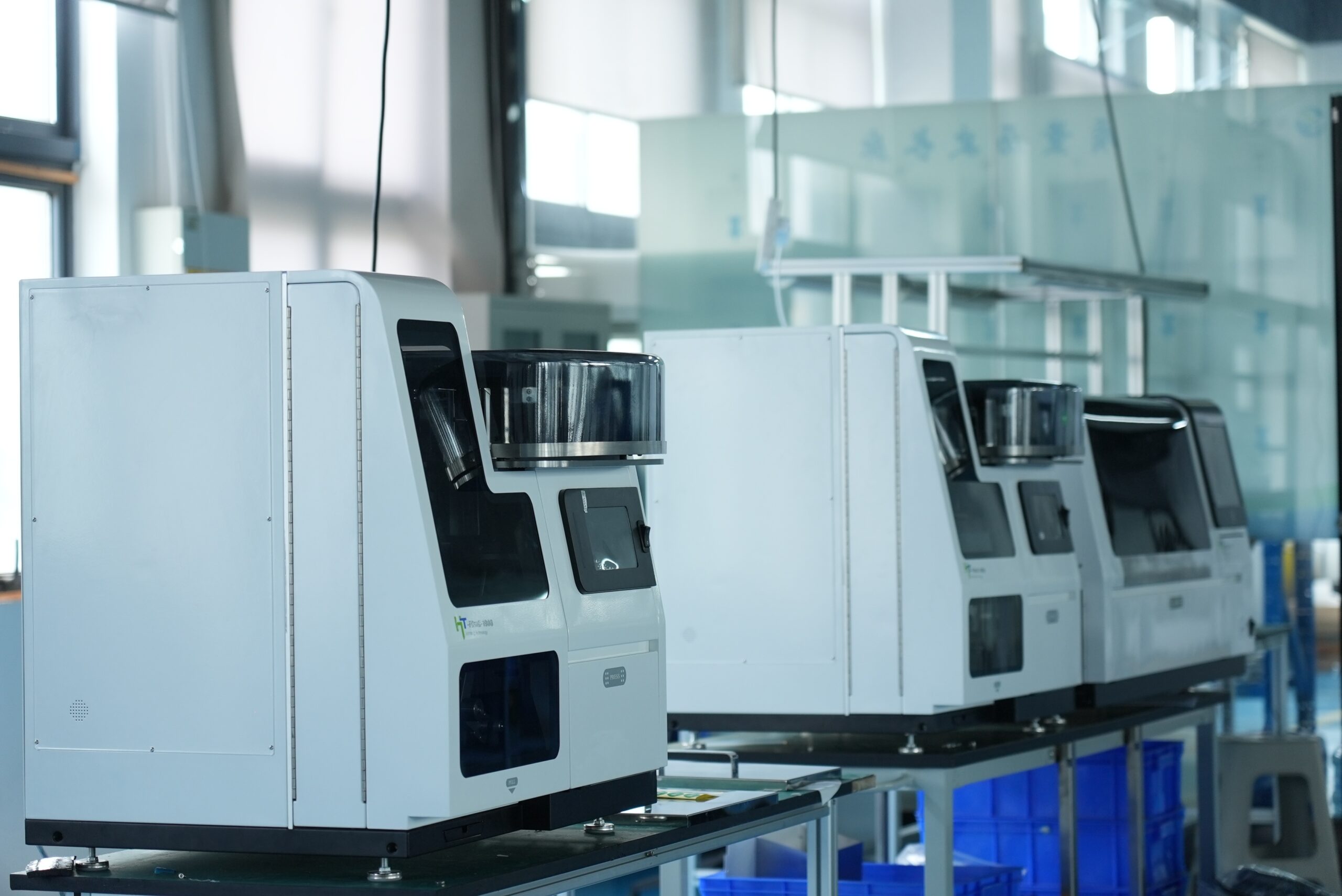
The HT-FilmC-1000 coverslipper here does 1,000 slides an hour, holds 240 finished slides in its output magazine, uses no liquid mounting media — fast, no fragments, no overflow, strip sits clear and flat on the section. One feature does quiet work: the coverslipping length is settable from 46 to 60 millimeters, in 1 mm steps. A short slide stops paying for film a longer slide needs — set the length to the workload and the waste line shrinks. Sakura's coverslippers do not offer this. Cloud monitoring reports the machine's state on its own. Paired with the HT-BSHE-660 stainer here — 660 slides an hour, 12 protocols at once, six configurable stations, 750 and 260 ml tanks, ASBT reagent tracking by slide count and age — you have an automatic coverslipping and staining workstation that runs from dewaxing to finished slide with nobody in the middle.
That is the honest version of Problem 2 from our side: machine priced like a machine, tape priced like tape. The workstation overview here and the contact page here are where distributors get current roll pricing and the per-slide worksheet.
Questions Distributors Ask Me
"My customer already runs a Sakura coverslipper. Can we sell them your tape?" Yes — that is what the film is made for. Same width, same xylene activation, lower price per roll. Run a test batch on their machine first; the yield check from Problem 3 applies there too.
"Is film as good as glass? Customers ask." The honest answer: film costs more per slide, and here is what the premium buys — faster runs, no glass fragments, no media to overflow or clean, high transparency for clear reading, and protection against dust, oxygen and moisture for the life of the archive. Glass is the traditional budget route, right for some labs. Price both with the five lines and let the arithmetic argue — it holds whether the machine across the table is a Leica coverslipper or a Sakura coverslipper; the formula does not care about the badge.
"How do I bring per-slide cost into a tender?" Attach the five lines to your bid, filled in with their workload. Every other quote shows a machine price; yours shows a cost per finished slide. The International Academy of Cytology here keeps slide preparation standards central to its guidance for the same reason: a bid built on per-slide cost answers the question the committee is actually asking.
The Bin, Six Months Later
When I go back to a lab half a year after the per-slide talk, I look in the bin again. Most of the time it is emptier. The yield is chalked on the prep-room wall, the roll price is in the contract, and somebody — usually the newest tech, it is always the newest tech — owns the number now.
A coverslipper quote is one document. The bin is the other one. Read both before you sign, and count what you throw away.